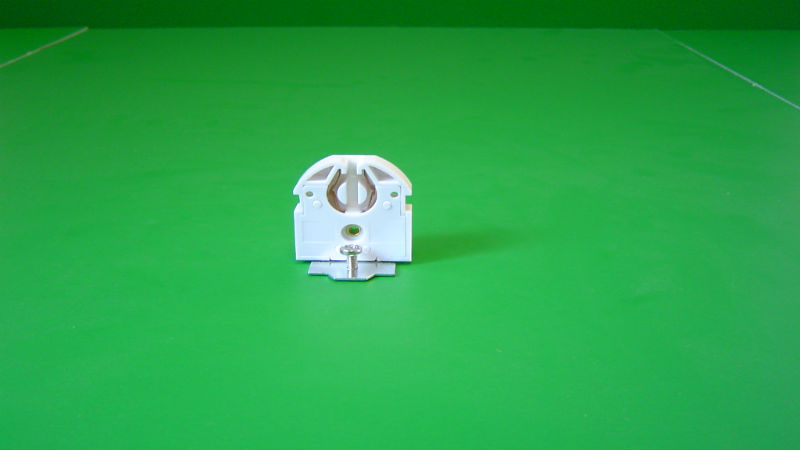
Fluorescent lighting is one of the more trouble-free types of lighting options out there, and once installed the tubes tend to have a much longer life than traditional bulbs.
However, just like anything else, it is possible for specific parts in the fixture to require repair or replacing. Changing a bulb is relatively easy, but installing replacement sockets can be a bit more challenging.
Troubleshooting
Before assuming a lighting problem requires new replacement sockets, there are some simple problems that are often assumed to be an issue with the socket. In fact, these issues are often a result of the failure of another component.
If the fixture doesn’t come on at all, check to make sure a breaker hasn’t been tripped. It is also important to check the actual tubes and make sure they have not simply burned out.
The tube may also be at fault if the bulb seems to be dim or if the ends seem brighter than the middle of the tube. A flickering or a repetitive flashing of the light is also typically a sign of a problem with the tub itself. However, these same issues can also be the starter, as well as sometimes issues with the ballast.
If the tube seems loose in the socket, this is often a problem with the pins of the tube being bent. When the pins are straight and the tube is still loose in the fixture, it may be time to consider replacement sockets.
Replacement Basics
When replacing sockets always may sure to turn off the power. This is more than flicking off the light switch, actually shut off the breaker for optimal safety. Remove the tubes and the cover plate and disconnect the existing wires to the socket.
Once the wires are removed, snap the socket out and replace with an exact replacement component. Double check before installing that it is either a shunted or non-shunted lampholder based on the existing component.
Connect the wires in the holes on the bottom and snap the new socket into place. Replace the cover, the tubes and the diffuser and then turn on the breaker and then the switch.
Remember, it is always important to start with the most obvious repair issues first. It is a lot less costly to replace a lampholder than to replace the entire ballast, which makes this is good repair option if the socket is a possible reason for the fixture failure.