
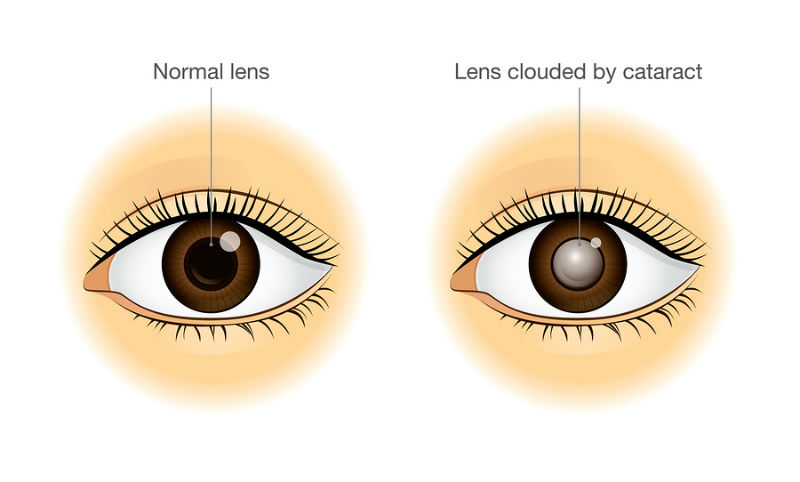
The world’s leading cause of blindness is cataracts. A cataract is a cloudy formation on the otherwise clear lens in your eyes. It could be small and unnoticeable or large and significantly impairing your ability to do daily activities. Cataracts can develop slowly over the years or swiftly in a matter of months. If they grow slowly, it may be hard to realize you have them since they grow without any discomfort or redness.
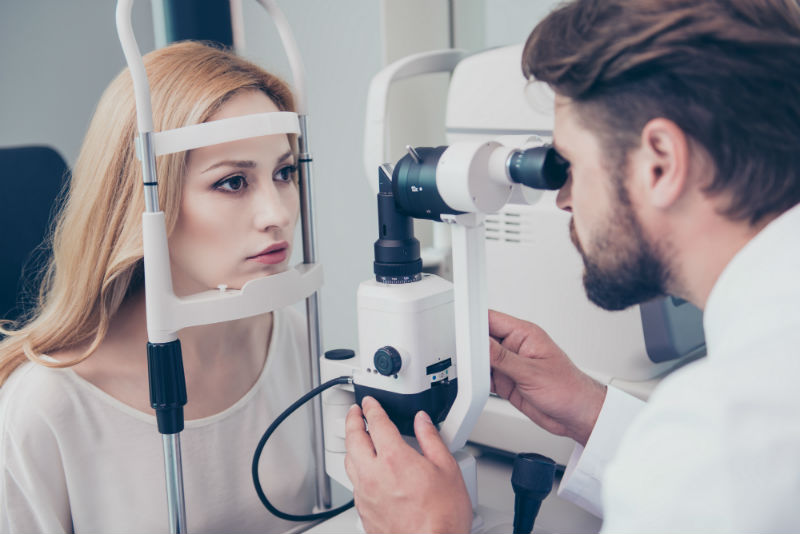
Although most patients are diagnosed above the age of 60, cataracts can start to develop at a younger age. In these cases, the only way to find out if you have cataracts is to get a full eye exam performed by a qualified optometrist. Once you are diagnosed, there are a few different medical and surgical treatments to explore.
Importance of early treatment
Because of their benign and painless nature in the early stages, some people elect to forego or delay treatment until a cataract starts to cause significant discomfort. Not treating or ignoring cataracts too long is a bad idea. Eventually, they can grow to a size where risks and complications could make it too late for surgery. After understanding the importance of the treatment, here are some medical and surgical treatments available to you.
Treatment options for cataracts
Cataract surgery is the most common surgery in the United States. It is also one of the lowest risk medical and surgical treatments in the world of medicine. In all forms of cataract removal surgery, the aim is to remove the cloudy lens and replace it with an artificial implant. An extra benefit of surgically replacing your lens may be improved near-sightedness, which is caused by a deformed lens.
The first type of cataract surgery is called phacoemulsification, or small-incision surgery. The doctor makes a small cut in the outer layer of your eye (cornea) and inserts a small device which emits ultrasound waves. These waves can break down the cloudy lens, which the surgeon removes and then replaces with the artificial one.
The second variation of cataract surgery is extracapsular cataract extraction or large-incision surgery. This is done for larger cataracts which cause significant vision problems. The cut in the cornea is larger, the clouded lens is removed all in one piece, and the artificial lens is inserted in its place. Because of the larger insertion and activity in the surgery, this form of surgery requires a longer healing time.
The third type of cataract surgery is femtosecond laser surgery. During this procedure, the surgeon uses a computerized laser to break up the cloudy lens and then inserts the new one. The laser surgery also provides the opportunity to correct for astigmatism by reshaping the lens during the procedure.
Final words
Since cataracts are such a common occurrence, it has become one of the most studied ailments of the eye and subsequently has modern and advanced treatments available and being developed. Everyone from ordinary professionals to celebrities have undergone cataract surgery. With a bit of research and planning, you too can find a good surgeon in your city for a reasonable fee.