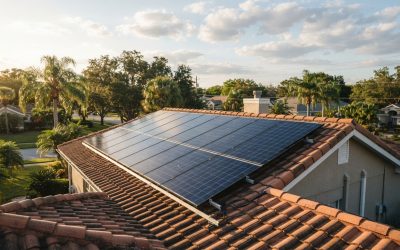
Your bathroom should be like a spa, an oasis for you to escape from the world, but more often than not, it’s a cleaning project. The worst kind of cleaning being mould. Mould grows in damp areas with little to no ventilation. Most of us are familiar with ceiling fans or exhaust fans in our bathrooms. They’re loud and typically not the most attractive looking items in the world. Besides being noisy and unattractive, they use excess electricity. More and more Sydney residents are moving towards leaving a smaller carbon footprint. This means looking for greener, cleaner energy sources and in Sydney that means solar energy. Solar energy prices, with the help of government incentives and rebates, have been dropping popularity and solar energy is becoming more affordable. An inexpensive and responsible way to prevent mould from growing in your bathroom is by installing mechanical ventilation. Installing a solar powered ventilation system will give the moist and hot air a place to escape promoting fresh circulated air in your bathroom and home. This 10-watt solar powered fan operates on power from a solar panel installed on your roof and is an excellent, free to run alternative to a traditional electric mechanical ventilation system.
Protecting Your Roof With Roof Ventilation Systems
If hot summers and wet winters are a problem for you and your household, you may be looking for a simple, clean solution that won’t break the bank, enter a solar roof fan. A solar roof fan’s function is to improve air circulation in your roof’s cavity. This not only improves the life of your roof but also keeps your house cooler in the summer months. That same sun that is baking your roof and trapping heat inside your roof’s cavity and attic is the same energy source that will power your, 10, 20 or 30 watt solar roof fan. The solar panel that collects sunrays will power the fan that ventilates out hot air of your roof’s cavity. This simple installation can improve temperatures in your roof’s cavity by 40 degrees Celsius. This system can be installed in your home, in your garage or in industrial settings and offices and comes equipped with a thermal snap switch, so you can control when ventilation starts and stops. A traditional electrical/mechanical roof ventilation system may suit your needs better. It is similar to its solar counterpart but relies on a minimal electrical output. Its powerful and undisruptive commercial grade 16-watt fan motor will help to decrease how often you run your home’s air conditioning. Roof ventilation is not the first upgrade people think to make on their homes, but it is a very beneficial one when they do.