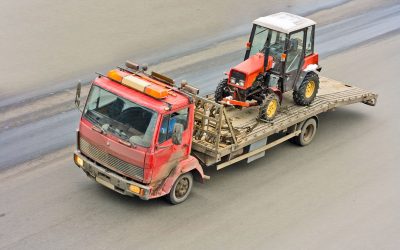
A vehicle can usually be towed after a tie rod breaks, but it may not be able to roll or steer normally during loading. The affected wheel can turn independently, drag against the pavement, or remain fixed at an extreme angle. These conditions must be considered before the vehicle is moved.
Drivers in San Tan, AZ, should stop operating a vehicle as soon as a tie rod failure is suspected. Attempting to drive even a short distance can reduce steering control and cause additional damage. A towing service can assess the wheel’s position and determine how to load the vehicle without relying on the damaged steering system.
What Does a Tie Rod Do?
A tie rod connects the steering mechanism to the steering knuckle at the wheel. When the steering wheel turns, this connection helps direct the front wheels together.
Tie rod assemblies commonly contain inner and outer sections. Their joints allow controlled movement while keeping the wheels pointed in the intended direction. Wear, corrosion, a hard curb strike, or an impact involving the front wheel may damage or separate these components.
Warning signs can include:
- Loose or imprecise steering
- Clunking near a front wheel
- Shaking through the steering wheel
- Uneven front-tire wear
- A vehicle pulling to one side
- A wheel pointing inward or outward
- Steering input that does not control one wheel
A mechanical inspection is necessary to identify the exact problem. Similar symptoms may also occur when ball joints, control arms, or other steering and suspension parts are damaged.
Why Is Driving With a Broken Tie Rod Dangerous?
A broken tie rod interrupts the physical connection used to control a front wheel. The driver may turn the steering wheel while the damaged wheel remains in place or moves in an unintended direction.
A car might still move forward after the failure, but that does not make it safe to drive. Acceleration, braking, uneven pavement, or a turn could cause the wheel to shift suddenly. The driver may be unable to maintain a lane or guide the vehicle away from traffic.
Continued movement can also damage:
- The front tire and wheel
- The steering knuckle
- Brake hoses and nearby wiring
- Suspension components
- The wheel well or fender
- The axle or drivetrain
If the steering begins to feel unstable, the driver should reduce speed without making abrupt movements and stop in the safest reachable area.
How Does Tie Rod Damage Affect Towing?
Towing a vehicle with steering damage requires more planning than moving a car with an engine or battery problem. During ordinary loading, the front wheels generally follow the direction in which the vehicle is pulled. A separated tie rod prevents the affected wheel from tracking correctly.
One wheel might remain straight while the other turns sideways. If the tire is dragged in that position, it can create resistance and make the vehicle harder to control. The wheel or undercarriage could also contact the loading surface.
Before moving the vehicle, the operator may need to determine:
- Which tie rod or front wheel is affected
- Whether the wheel can rotate
- Whether the vehicle can be placed in neutral
- Whether the parking brake can be released
- Whether the tire contacts the body
- Whether collision damage is also present
- How much room is available for loading
This information helps the operator select an appropriate loading direction and prepare for a wheel that cannot steer normally.
Can a Light Duty Tow Truck Move the Vehicle?
A light duty tow truck can transport many passenger cars, SUVs, minivans, motorcycles, and qualifying pickup trucks. However, the vehicle’s weight is only one part of determining the appropriate equipment.
A vehicle with a broken tie rod may require a flatbed so that none of its wheels remain on the road during transport. The operator may also use devices that allow the misaligned wheel to move across the loading surface without being forced to roll normally.
Flatbed transport does not eliminate the need for careful loading. The vehicle must still be pulled onto the platform, controlled as it moves, and secured without using damaged steering parts as attachment points.
Drivers seeking light duty towing should explain the steering failure when placing the request. This helps the provider understand that the call involves more than a routine mechanical breakdown.
What Information Should Be Given to Dispatch?
A clear description can help the towing provider prepare before arriving. Drivers should avoid describing the problem only as “the car will not move.”
Helpful details include:
- Vehicle year, make, and model
- Exact location in San Tan
- Which front wheel appears affected
- The direction the wheel is pointing
- Whether the vehicle rolls at all
- Whether the steering wheel still turns
- Whether the tire is touching the wheel well
- How the failure occurred
- Whether the vehicle is near moving traffic
- Any gates, low clearances, slopes, or tight access points
If it is safe to do so, a photo of the damaged wheel can provide useful context. Drivers should not approach traffic or crawl underneath the vehicle to take pictures.
What Should Drivers Avoid While Waiting?
Drivers should not try to straighten the wheel manually or reconnect the tie rod at the roadside. They should also avoid tying the wheel in place with rope, wire, or straps. These methods may fail as soon as the vehicle begins moving.
Using another passenger vehicle to push or pull the disabled car is also unsafe. The driver may have little or no ability to steer the damaged vehicle, creating a risk of contact with nearby vehicles or property.
Hazard lights should be activated when possible. Occupants should wait in the safest available location based on traffic, roadway conditions, and the vehicle’s position.
How Is a Tie-Rod-Damaged Vehicle Secured?
Once loaded, the vehicle must be attached at suitable structural or approved securement points. The damaged tie rod should never be treated as an attachment point.
The operator will also need to verify that the misaligned wheel and any loose components cannot shift during transportation. If the vehicle cannot steer or roll, the receiving repair facility should be informed so it can prepare for unloading.
Request Safe Transportation in San Tan
A broken tie rod can leave a vehicle without reliable steering, but it can still be transported using an appropriate towing method. The key is communicating the damage before loading begins.
Do not continue driving or attempt a temporary roadside repair. Contact a local towing provider, explain the wheel and steering condition clearly, and arrange transportation to a suitable repair facility in San Tan, AZ.