The gist:
• Phoenix heat, factory wiring quirks, and botched prior installs cause most car audio failures drivers experience in the valley.
• A trained installer diagnoses wiring, grounding, and heat-related damage rather than just swapping parts.
• Professional car stereo installation in Phoenix AZ addresses both sound quality and long-term reliability in extreme desert conditions.
Most car audio problems in the Phoenix area trace back to heat damage, poor grounding, or a rushed previous installation rather than a defective head unit. A trained technician can usually pinpoint the actual cause in a single diagnostic visit instead of guessing through parts replacement.
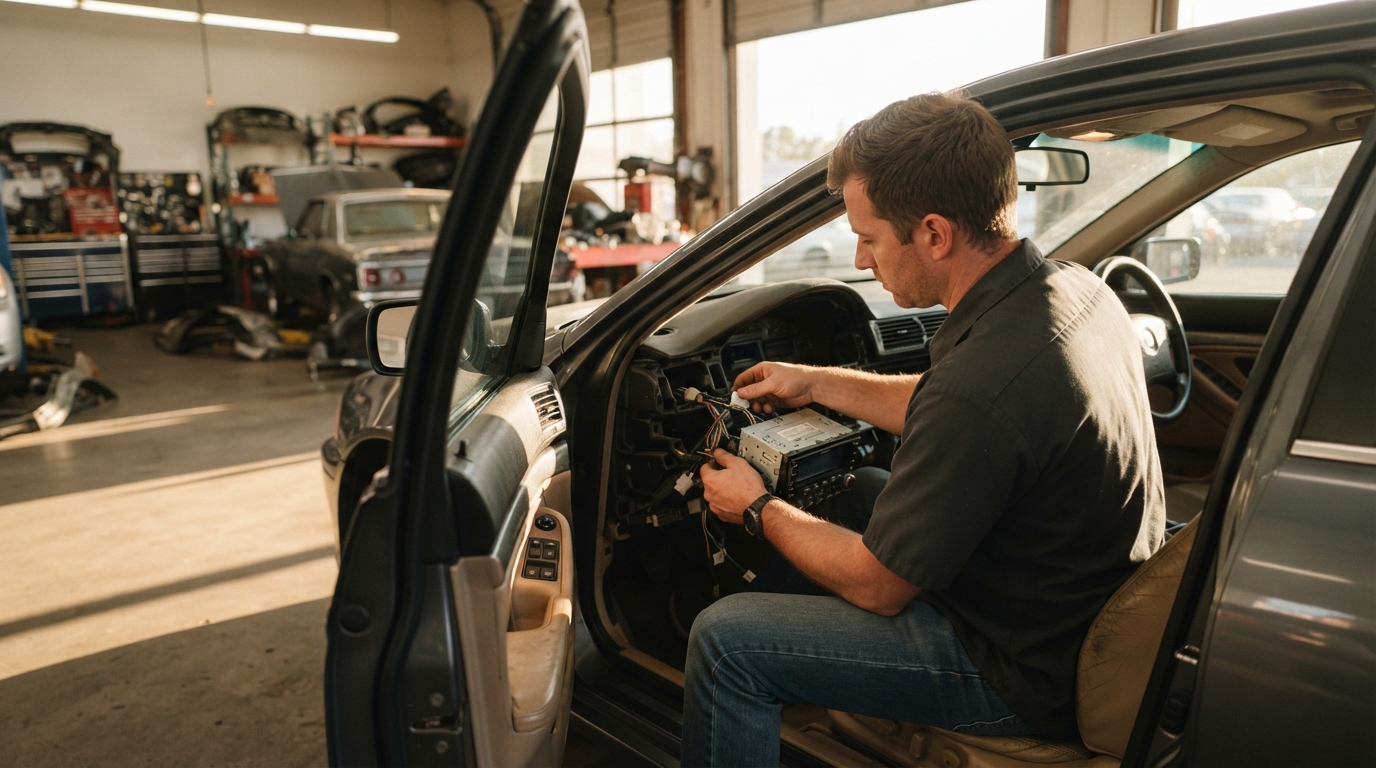
Drivers searching for reliable Car Stereo Installation in Phoenix AZ are often dealing with a system that stopped working correctly after a DIY attempt, a factory unit that no longer supports modern phone connectivity, or speakers that distort at moderate volume. These are mechanical and electrical issues with identifiable fixes, not random malfunctions. Understanding what typically goes wrong helps explain why professional diagnosis matters more than simply buying new equipment.
Why Phoenix Heat Is Hard on Car Audio Systems
Arizona’s climate creates conditions that few other markets have to engineer around.
• Cabin temperatures in parked vehicles can climb well past 150 degrees during summer months.
• Extended UV exposure breaks down adhesives holding trim panels and speaker mounts.
• Repeated heat cycling stresses wiring insulation and solder joints over time.
Sun Valley Stereo’s installers work with these conditions daily, selecting components and wiring routes built to withstand Arizona summers rather than relying on generic installation methods designed for milder climates.
Common Problems an Installer Diagnoses First
Before replacing any equipment, an experienced technician checks a short list of likely culprits.
1. Blown or rattling speakers – Often caused by underpowered factory wiring forcing speakers beyond their safe range.
2. No sound from one channel – Usually a grounding fault or a connector that corroded from heat exposure.
3. Head unit resets or freezes – Frequently linked to voltage spikes or a failing capacitor in older aftermarket units.
4. Static or interference – Commonly traced to unshielded wiring run too close to the vehicle’s electrical harness.
5. Phone pairing failures – Often a firmware mismatch or an outdated head unit that cannot support current Bluetooth or smartphone protocols.
Distraction while fumbling with a malfunctioning system is a genuine safety concern. NHTSA data shows that distracted driving contributed to thousands of fatal crashes, with the agency specifically naming stereo and infotainment controls among the common sources of driver distraction. A properly functioning system reduces the time drivers spend troubleshooting audio issues while the vehicle is in motion, which is one reason correcting these problems matters beyond simple convenience.
DIY Installation vs. Professional Diagnosis
| Factor | DIY Install | Professional Install |
| Wiring diagnosis | Limited to visible connections | Full harness and grounding check |
| Heat-resistant components | Rarely matched to climate | Selected for Arizona conditions |
| Warranty coverage | Typically none | Lifetime warranty on workmanship |
| Correcting prior bad installs | Not applicable | Routinely diagnosed and repaired |
Many Phoenix drivers who attempt a stereo swap themselves run into wiring mismatches between factory harnesses and aftermarket units, which can trigger several of the symptoms listed above. Sun Valley Stereo, a Phoenix car audio shop that has operated in the area since 1978, routinely corrects installations that were done incorrectly elsewhere, a service many customers find valuable after a frustrating first attempt.
What a Proper Installation Includes
A complete installation goes beyond mounting a new head unit in the dash opening.
• Matching equipment to the vehicle’s existing wiring and power capacity.
• Integrating Apple CarPlay or Android Auto where supported by the hardware.
• Wiring amplifiers and subwoofers with enclosures sized correctly for the cabin.
• Checking factory stereo integration points so backup cameras and steering wheel controls still function.
• Testing the complete system under real driving conditions, not just in a static bench test.
Skipping any of these steps is usually how an installation looks fine on day one but develops problems within a few months of Phoenix heat exposure.
Frequently Asked Questions
Why does my car stereo work fine in winter but fail in summer? Heat expansion and contraction can loosen connectors and degrade adhesive-mounted components, which often shows up as intermittent problems once cabin temperatures climb.
Can a bad previous installation really cause ongoing problems? Yes. Incorrect wiring splices or missing grounds from an earlier install are common sources of static, power loss, or speaker damage that surface later.
Is it worth replacing a factory stereo that still works? If the unit lacks modern phone connectivity or navigation support, replacement often resolves usability complaints even when the original hardware has not failed outright.
How long does a typical stereo installation take? Timing depends on the vehicle and scope of work, since integrating factory wiring or building custom enclosures takes longer than a straightforward head unit swap.
Car audio problems in Phoenix rarely stem from a single bad component. They usually reflect a combination of heat stress, aging wiring, and installation shortcuts that compound over time. Learn More: Working with an experienced local shop such as Sun Valley Stereo means they check those variables before replacing any part, which tends to produce a system that performs reliably through another Arizona summer rather than one that needs revisiting in a few months.