Takeaway:
- Quartz countertops are engineered from natural stone and resin, giving them consistent patterns and strong resistance to stains and scratches.
- Proper fabrication and sealing of seams matter more than the material itself for long-term durability in a Doral, FL kitchen.
- Routine cleaning with mild soap and water, without harsh chemicals, keeps quartz surfaces performing well for years.
A Quartz Kitchen Countertop is an engineered surface made from roughly 90 percent crushed natural quartz combined with resins and pigments, producing a non-porous material that resists stains, scratching, and bacteria growth better than many natural stones. This manufacturing process also allows for consistent color and pattern across large slabs, which is harder to achieve with quarried materials. Homeowners comparing options for a kitchen renovation often weigh this consistency against the organic look of granite or marble before deciding.
What Makes Quartz Different From Natural Stone
Quartz is engineered rather than quarried whole, which changes how it performs day to day.
- Non-porous surface: Resin binders fill in natural gaps, reducing the need for periodic sealing that granite and marble require.
- Pattern consistency: Manufacturers can replicate the same veining or fleck pattern across multiple slabs, useful for large kitchens or matching an island to perimeter counters.
- Color range: Pigments allow for shades not found in nature, including solid whites, deep blacks, and bold accent tones.
These traits matter for kitchens in Doral, FL, where humidity and frequent cooking activity can stress porous surfaces over time.
Durability Factors Homeowners Should Understand
Quartz resists daily wear well, but no countertop material is indestructible. According to the U.S. General Services administration guidance on sustainable facilities, engineered stone surfaces are recognized for low maintenance and long service life in commercial and residential applications when properly installed. Heat resistance is a common point of confusion.
- Quartz withstands brief contact with warm pots but can discolor or crack under sustained high heat, so trivets remain necessary.
- Direct sunlight over long periods can cause slight fading in some resin formulations.
- Sharp knives and heavy impacts can chip edges, particularly at seams or corners.
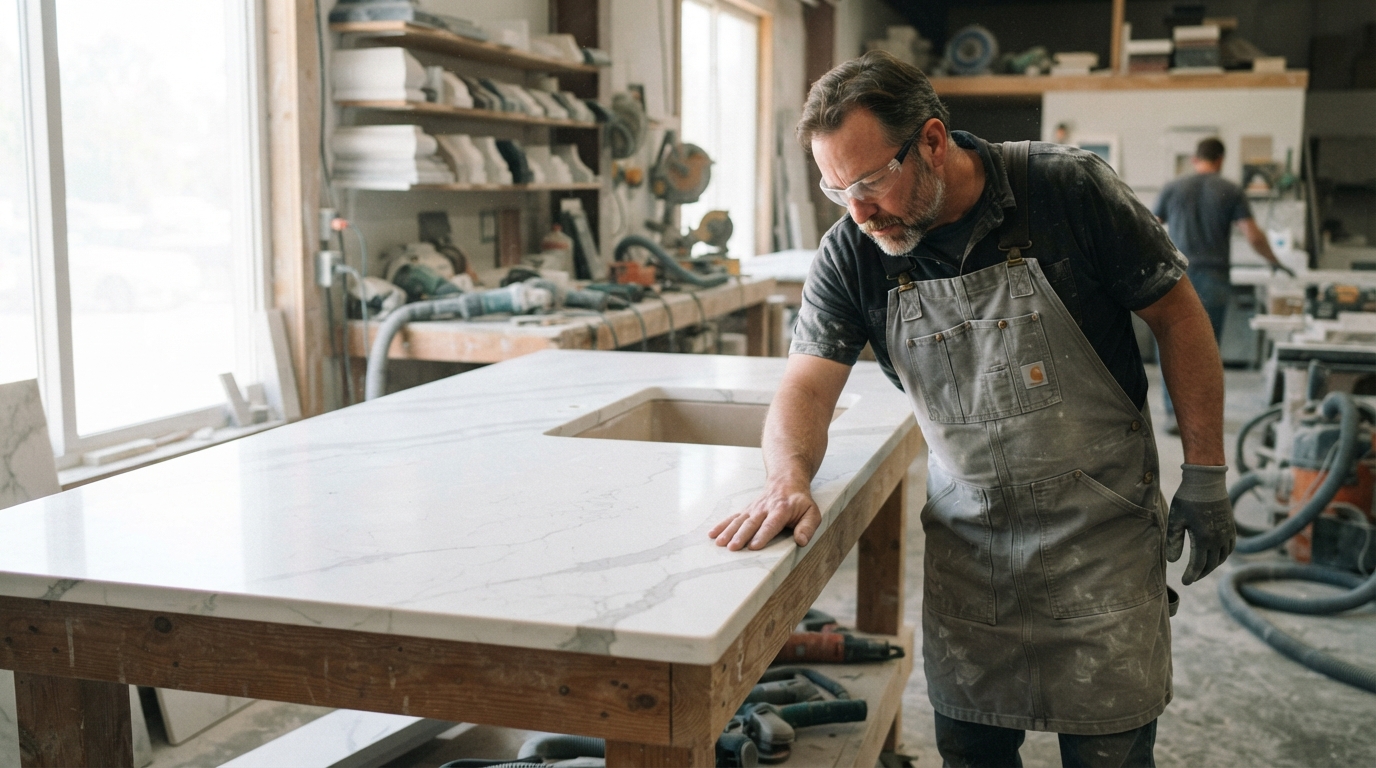
Fabrication quality affects these outcomes as much as the material itself. Poorly cut seams or inadequate support beneath overhangs can lead to cracking regardless of the slab’s inherent strength.
Installation Considerations for Local Kitchens
Kitchens in Doral, FL often deal with high humidity and salt air common to South Florida, which can affect cabinetry and adhesives even when the countertop surface itself is unaffected. Selecting a fabricator familiar with regional conditions helps reduce long-term issues with seam adhesive curing and edge sealing. Template measurements, slab selection, and edge profile choices (such as beveled, bullnose, or straight edges) all influence both appearance and long-term wear patterns.
| Factor | Quartz | Granite | Laminate |
| Sealing required | No | Yes, periodic | No |
| Heat resistance | Moderate, trivets advised | High | Low |
| Pattern consistency | High | Variable, natural | High |
| Typical lifespan | 15-25+ years with care | 20-30+ years | 10-15 years |
Maintenance Practices That Extend Lifespan
Daily care for quartz is straightforward compared to porous stone options.
- Wipe spills promptly with mild soap and water rather than abrasive cleaners.
- Avoid bleach-based or highly alkaline cleaning products, which can degrade resin binders over time.
- Use cutting boards instead of cutting directly on the surface to prevent fine scratches.
- Place trivets under hot cookware even though brief contact is generally tolerated.
Following these steps helps maintain the surface’s appearance without requiring resealing or refinishing, a maintenance advantage over natural stone for busy households.
Frequently Asked Questions
Is quartz more durable than granite for kitchen counters? Both materials perform well, but quartz offers more consistent resistance to staining since it is non-porous, while granite can offer higher heat tolerance in some formulations.
Does a quartz countertop need sealing? No. The resin binding process makes quartz non-porous, so sealing is not part of routine maintenance the way it is for granite or marble.
Can quartz countertops crack from everyday use? Cracking is uncommon under normal use but can occur from sustained heat exposure, heavy impact, or inadequate support beneath overhangs and seams.
How long does a quartz countertop typically last? With routine care and proper installation, quartz surfaces commonly perform well for 15 to 25 years or longer before replacement is needed.
Local Sourcing and Service Information
Based in Miami, FL, Jegam Stones Inc serves customers across Doral, FL.
Current availability details for Quartz Kitchen Countertop Supplier in Doral FL are published for the local service area.