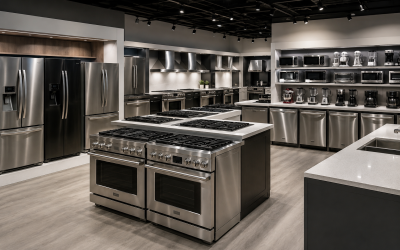
• Double wall ovens add two separate cooking cavities at eye level, reducing bending and allowing two dishes to bake at different temperatures at once.
• Installation requires a tall cabinet cutout, typically 50 to 53 inches, and a dedicated electrical circuit rated for the unit.
• Kitchen appliance selection and installation guidance is available for residents across San Diego, CA.
A double wall oven is a built-in appliance with two stacked oven cavities installed directly into kitchen cabinetry, giving households independent temperature control and more usable cooking capacity than a single range oven. The design suits kitchens where counter space is limited or where multiple dishes need to cook simultaneously at different settings.
Homeowners researching Double Wall Ovens are often comparing them against single wall ovens or traditional range-and-oven combinations to decide which layout fits an existing kitchen footprint. The decision usually comes down to available cabinet depth, cooking habits, and whether a household regularly prepares large meals that require more than one oven temperature at a time.
Why Two Cavities Change Everyday Cooking
Splitting cooking tasks between two separate compartments solves a common kitchen bottleneck: needing different temperatures for different dishes at the same time.
• One cavity can roast a main dish while the other handles baking at a lower temperature.
• Smaller side dishes can finish in the compact upper oven without heating the larger lower cavity.
• Entertaining and holiday cooking become easier when two ovens run on separate schedules.
Because each cavity is smaller than a full range oven, preheat times are often shorter for smaller items, which can reduce overall energy use during short cooking tasks.
Ergonomics and Placement Benefits
Wall ovens are installed at a height chosen during the kitchen layout, which is one of the most cited reasons homeowners upgrade from a traditional range.
1. The upper cavity typically sits near waist or chest height, reducing the need to bend down to check or remove food.
2. The lower cavity still sits higher than a standard range oven, which also benefits household members with mobility limitations.
3. Placement away from the cooktop frees up counter space near the stove for prep work.
This layout flexibility is one reason double wall ovens are frequently chosen during kitchen remodels rather than as a simple one-to-one appliance swap.
Planning the Installation Space
Double wall ovens require more vertical cabinet space than single units, and the cutout dimensions are not interchangeable with a standard single oven opening. Industry installation guidance indicates a double oven cutout generally needs a cabinet opening in the range of 50 to 53 inches tall, nearly double the height required for a single oven. Electrical requirements also differ, since double ovens commonly need a dedicated 40-amp or 50-amp circuit rather than the lower-amperage circuit used for single units.
|
Factor |
Single Wall Oven |
Double Wall Oven |
|
Typical cutout height |
27 to 28 inches |
50 to 53 inches |
|
Circuit requirement |
30-amp dedicated |
40 to 50-amp dedicated |
|
Cooking capacity |
One cavity |
Two independent cavities |
|
Best fit |
Compact kitchens |
Kitchens with frequent multi-dish cooking |
Door swing space also matters: manufacturers generally recommend leaving roughly 21 to 23 inches of clearance in front of the unit so the open door does not block kitchen traffic. Confirming these measurements against the specific model’s installation manual before ordering cabinetry avoids costly rework later.
San Diego Kitchens and Appliance Access
Many San Diego, CA kitchens, particularly in older coastal homes and mid-century properties, were originally built around a single range rather than separate wall ovens, which means cabinetry modification is often part of a double oven upgrade. Confirming cutout height and electrical capacity early in a remodel helps avoid mismatched cabinetry orders, a frequent issue in homes not originally designed for stacked ovens.
Appliance selection guidance for kitchen and home appliance categories is available to residents throughout San Diego, CA. Based in USA, the business extends service to shoppers across that same San Diego, CA area.
Get to Know The Appliance Options is a business name associated with appliance retail support serving the region, operating from its home base rather than maintaining a presence inside San Diego, CA itself.
Frequently Asked Questions
Does a double wall oven need a different cabinet than a single oven? Yes. A double oven requires a significantly taller cutout, generally around 50 to 53 inches, compared to roughly 27 to 28 inches for a single unit, so existing single-oven cabinetry typically cannot be reused without modification.
Can a double wall oven run on the same electrical circuit as a single oven? Not usually. Double wall ovens commonly require a dedicated 40-amp or 50-amp circuit, while single ovens are often wired to a 30-amp circuit, so an electrician should verify capacity before installation.
Is a double wall oven worth it for a small household? It depends on cooking habits rather than household size. Households that regularly bake and roast at the same time, or host gatherings requiring multiple dishes, tend to benefit most from the added capacity.
Do double wall ovens use more energy than a single oven? Energy use depends on how the cavities are used. Running only the smaller cavity for quick tasks can use less energy than heating a full-size range oven for the same job.
Final Thoughts
Choosing between a single and double wall oven setup comes down to cabinet space, electrical capacity, and how often a household needs two independent cooking temperatures at once. Verifying cutout dimensions and circuit requirements before purchasing cabinetry remains the most effective way to avoid installation delays.
Current appliance category details from Get to Know The Appliance Options are published for reference by area shoppers planning a kitchen update.