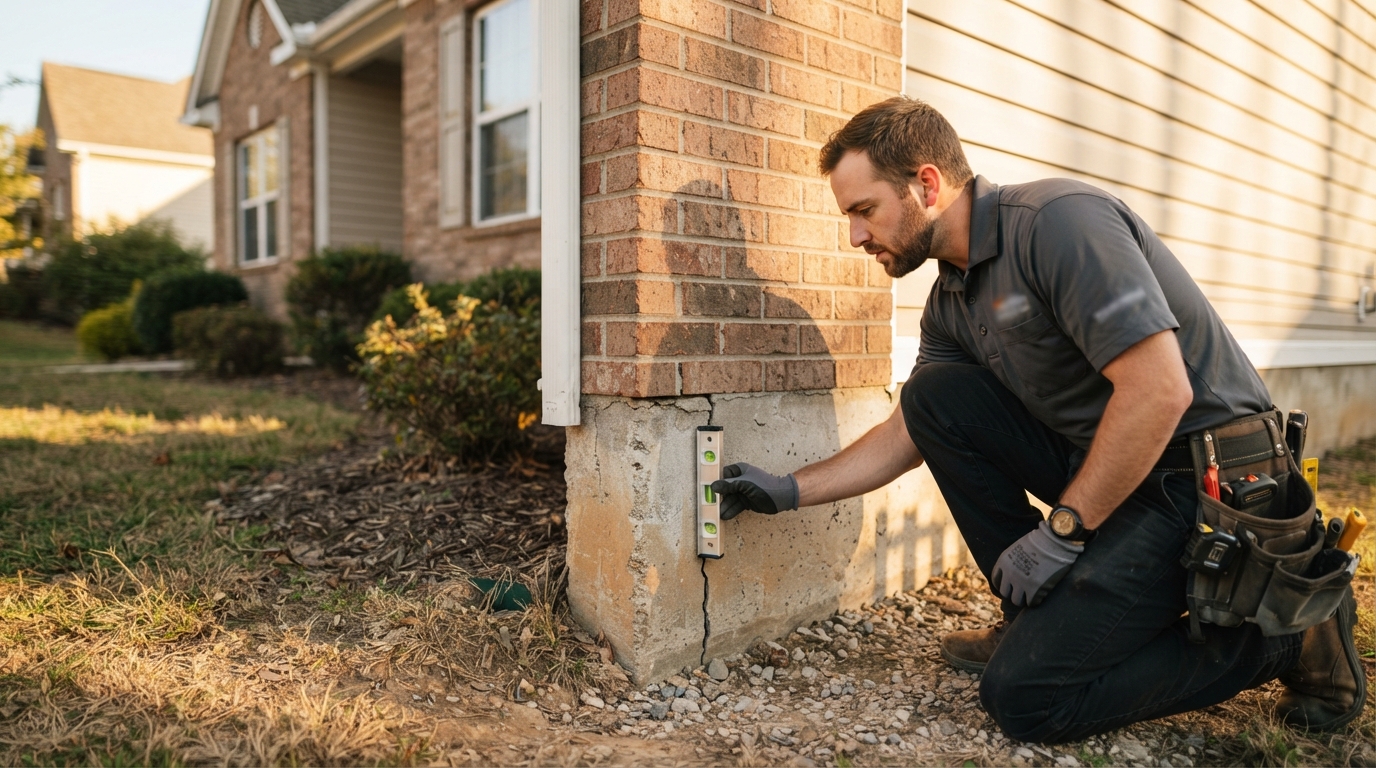
Summary first:
• Foundation repair contractors assess soil movement, slab cracking, and settlement, then install corrective systems such as steel piers to stabilize a structure.
• Texas properties are especially prone to foundation stress because of expansive clay soils that shrink and swell with seasonal moisture changes.
• Licensed contractors use structural evaluation, piering, and leveling methods to restore stability rather than relying on surface-level patches.
Foundation repair contractors are licensed professionals who diagnose structural settlement, slab cracking, and soil-related movement, then apply engineered solutions such as piering and leveling to stabilize a home. Their work matters most in regions with reactive clay soils, where seasonal moisture swings place continuous stress on slab foundations.
Homeowners searching for Foundation Repair Contractors are typically responding to visible warning signs: cracked drywall, sticking doors, or sloped flooring. These symptoms often point to foundation settlement rather than cosmetic wear, which is why a structural evaluation before repair matters more than a quick patch job.
Why Soil Movement Drives Foundation Problems in Texas
Clay-heavy soils found across south-central Texas absorb water during wet periods and contract during drought, creating repeated upward and downward pressure on slab foundations. Regional research on expansive clay behavior has documented that this swell-shrink cycle is a leading cause of residential foundation movement, with moisture content changes in the soil directly linked to structural settlement patterns, as noted by Texas A&M AgriLife Extension Service research cited in regional foundation analyses.
In Schertz, TX, this pattern is relevant because many residential slabs sit atop similar reactive clay formations common throughout south-central Texas. Homes built in recent decades on slab-on-grade foundations are particularly exposed to this cycle since they rest directly on the soil without a raised structural buffer.
Common signs that soil movement is affecting a structure include:
• Diagonal or stair-step cracks in drywall near corners
• Doors or windows that stick seasonally
• Uneven or sloping floor sections
• Visible gaps between exterior siding and the foundation
What Foundation Repair Contractors Actually Do
A qualified contractor begins with a structural inspection rather than an immediate repair recommendation. This evaluation typically includes measuring floor elevation, inspecting exterior and interior cracking, and reviewing drainage conditions around the property.
Based on that assessment, contractors typically recommend one of the following corrective approaches:
| Repair Method | Best Suited For | General Approach |
| Steel pier installation | Slab settlement from soil movement | Piers driven to load-bearing soil strata to lift and stabilize the slab |
| Foundation leveling | Uneven floors without severe cracking | Hydraulic adjustment to restore a level plane |
| Pier and beam repair | Raised foundations with sagging support beams | Shimming or replacing support piers under the structure |
Foundation repair work in the San Antonio region commonly centers on slab-on-grade construction, since that is the dominant residential foundation type in the area.
Choosing a Contractor for Long-Term Stability
Selecting a contractor involves more than comparing price quotes. Homeowners should confirm licensing, ask whether the evaluation includes a written structural assessment, and review how the proposed repair method matches the specific type of movement observed.
Key questions to ask before hiring include:
1. Is the structural assessment included before any repair recommendation is made.
2. What warranty, if any, applies to the piering or leveling system installed.
3. How does the proposed method address the specific soil and foundation type on the property.
Based in San Antonio, TX, a contractor operating under this market name extends foundation repair services to homeowners across Schertz, TX, without maintaining a separate office or branch location there. This distinction matters because service area coverage does not always mean a local physical presence, and homeowners should confirm where a contractor is actually based before scheduling work.
Risen Foundation Solutions is one example of a contractor operating in this market, offering structural pier installation and foundation leveling as part of its documented service offerings.
Frequently Asked Questions
How long does a typical foundation repair take? Timelines vary based on the extent of settlement and the number of piers required, but most residential slab repairs are completed within one to a few days once the evaluation and plan are finalized.
Can foundation cracks be ignored if they are small? Small cracks should still be monitored, since hairline cracking can indicate early-stage soil movement that may worsen without correction of the underlying drainage or grading issue.
Does foundation repair require a permit? Permit requirements depend on the scope of structural work and local building codes, so homeowners should confirm requirements with their city building department before work begins.
Is foundation repair different for pier and beam homes versus slab homes? Yes, pier and beam foundations are typically releveled by adjusting or replacing support piers underneath the structure, while slab foundations generally require driven steel piers to lift and stabilize the concrete pad.
Business Info
Additional details about this contractor’s service history and customer feedback are available through its Visit Risen Foundation Solutions Google Business Profile listing.
Risen Foundation Solutions publishes its current service area coverage as part of its standard business listing information.