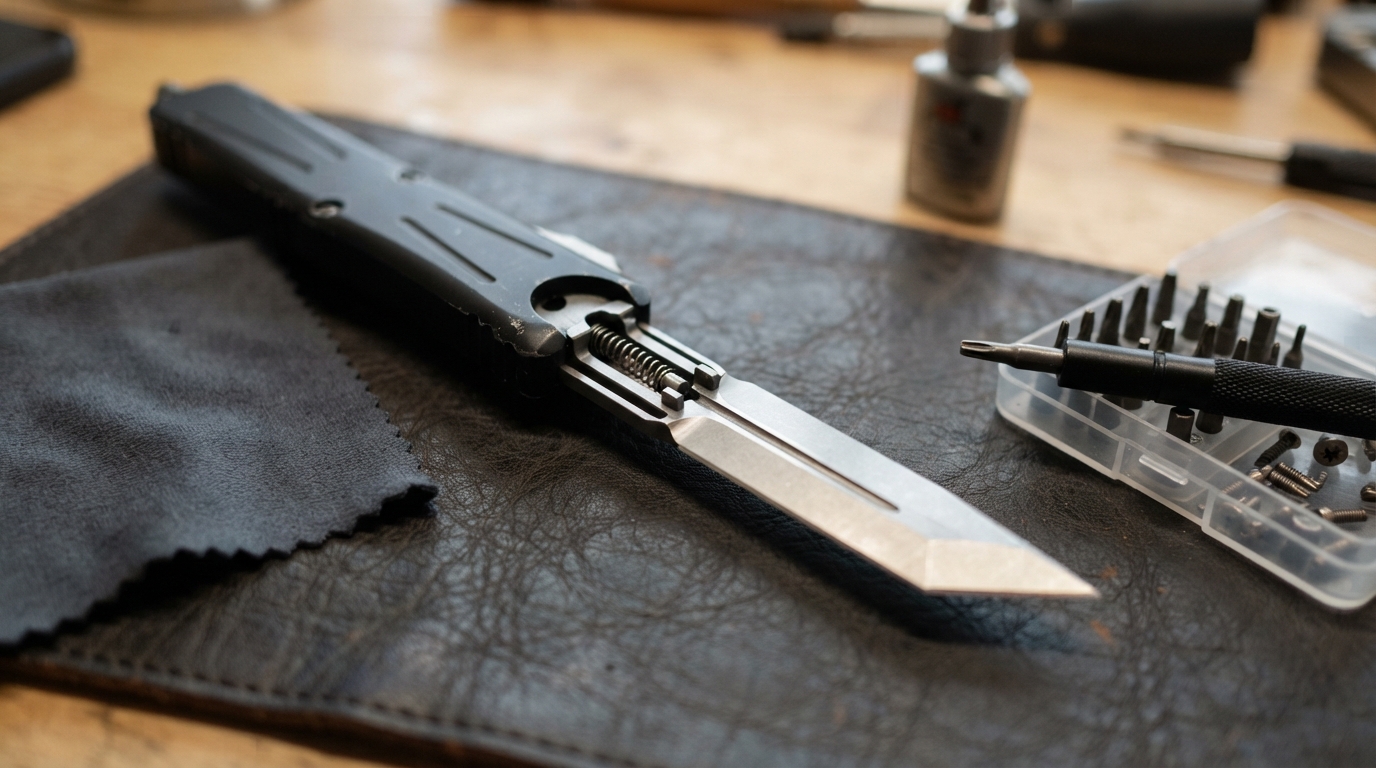
An OTF knife is an automatic blade that extends and retracts directly from the front of the handle at the push of a button, rather than pivoting open from the side. Shoppers researching OTF Knives For Sale typically want to understand deployment mechanisms, legal restrictions, and build quality before committing to a purchase.
Automatic knives occupy a distinct legal category in many states, and OTF models carry additional scrutiny because of their rapid blade travel. Buyers should review state and local statutes before ordering, since possession rules differ from one jurisdiction to another even within the USA. A reputable retailer will typically note these restrictions on product pages or at checkout rather than leaving compliance entirely to the buyer.
Single Action vs Double Action Mechanisms
OTF knives generally fall into two mechanical categories, and the difference affects both feel and maintenance.
• Single action: the button only fires the blade forward; the user manually retracts it by pulling the blade back until it locks.
• Double action: one button press deploys the blade, and a second press (or reverse motion) retracts it automatically.
• Double action designs tend to have more internal components, which can mean more parts to clean and lubricate over time.
• Single action designs are often simpler mechanically, which some owners associate with fewer failure points.
Neither mechanism is universally superior; the right choice depends on how the knife will be used and how much maintenance the owner is willing to perform.
Blade Steel and Build Quality
Blade steel affects edge retention, corrosion resistance, and how often the knife needs sharpening. Common steels found in OTF knives range from budget-friendly stainless options to higher-end powder metallurgy steels that hold an edge longer but can be more difficult to sharpen. The National Institute of Standards and Technology maintains general reference data on metal alloy properties, which can help buyers understand baseline corrosion and hardness characteristics of different steel families through NIST materials research.
Handle material also matters for grip and longevity:
|
Handle Material |
Durability |
Weight |
Typical Use Case |
|
Aluminum |
High |
Light |
Everyday carry |
|
Zinc alloy |
Moderate |
Heavier |
Budget models |
|
G10 composite |
High |
Light-moderate |
Heavy-duty use |
Checking Legal Requirements Before Purchase
Automatic knife laws vary significantly, and some states restrict blade length, carry method, or outright possession of OTF mechanisms. Buyers should check their state attorney general’s office or local law enforcement guidance rather than relying solely on a seller’s disclaimer. Age restrictions commonly apply as well, and many retailers require age verification at the point of sale to comply with state and federal regulations.
• Confirm whether OTF knives are legal to own in the buyer’s state of residence.
• Check blade length limits, since many states cap automatic blades at a specific measurement.
• Review carry restrictions separately from ownership restrictions, as some states allow possession but limit public carry.
• Verify age requirements before placing an order.
Product listings for out-the-front models, including specifications on deployment type and blade steel, are maintained by Blade City, a knife retailer operating in the USA.
Frequently Asked Questions
Are OTF knives legal to own? Legality depends on the state, with some jurisdictions restricting or banning automatic knives entirely while others permit ownership with blade length limits.
What is the difference between single action and double action OTF knives? Single action models require manual blade retraction after firing, while double action models retract the blade automatically with a second button press or reverse motion.
Do OTF knives require more maintenance than folding knives? The internal firing mechanism typically needs occasional cleaning and lubrication to keep the blade deploying smoothly, more so than a standard folding knife hinge.
What blade steel is best for everyday use? Mid-range stainless steels often balance edge retention and ease of sharpening well for everyday carry, while premium powder metallurgy steels hold an edge longer but require more sharpening expertise.
Current product listings and specifications for Blade City are published for buyers comparing deployment types and blade steels before purchase.