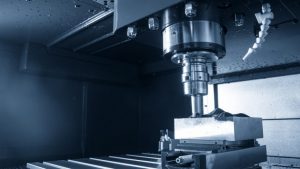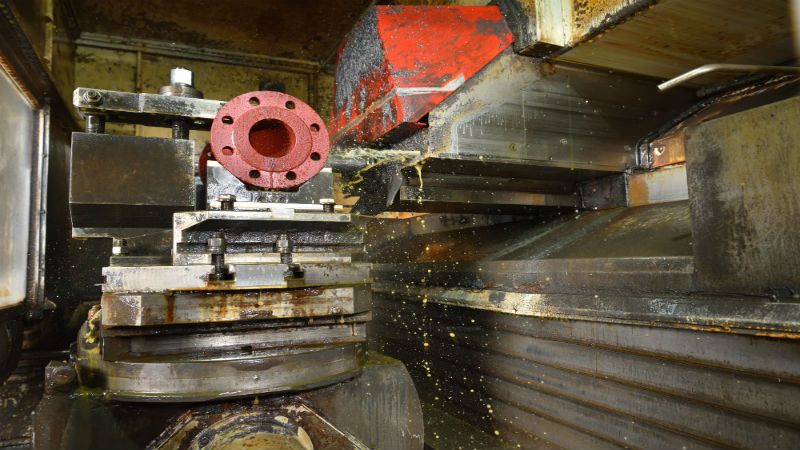
Boring is an operation that enlarges an existing hole in a part using a specifically designed cutting tool, such as a drill bit, to enhance precision. Cutting removes material from the workpiece’s interior. Boring has a wide range of uses since it can make holes of various sizes and accuracy levels.
A boring operation is practically the sole processing method for holes with a large diameter, great size, and position accuracy. Boring can be accomplished on the lathe by spinning the component while attaching the holder and boring tool bar with a cutter bit on the tool post.
Looking at Boring Machines
A boring machine is a tool that can enlarge existing holes created by drilling or other techniques to produce more accurate and smooth holes. It is commonly used to process deep holes in workpieces such as oil cylinders, cylinders, hydraulic cylinders, spindle holes, blind holes, and step holes.
According to the processing, three types of boring machines are used for a boring operation.
- Horizontal boring machines use a spindle that is parallel to the work surface to bore holes.
- Vertical boring machines employ a rotating component attached to a horizontal table that allows the borer to travel upward or downward.
- Line-boring machines are where both ends of the boring bar are supported.
Difference Between Boring and Drilling
Drilling is used to make a hole, whereas boring is used to increase the diameter of the hole. Drilling should be followed by boring. Boring requires the use of a boring bar, whereas drilling uses drill bits. Furthermore, a boring bar is a single-point cutter, but a drill is multi-point. Boring cannot expand the axial length of a hole, but drilling can.