Simply put:
• Sandless floor refinishing restores dull, scratched hardwood by cleaning and resurfacing the existing finish rather than grinding down the wood with a drum sander.
• The process typically finishes in about a day, produces little dust, and works well for floors with surface-level wear rather than deep gouges.
• It is not a color-change treatment; it renews the finish already on the floor.
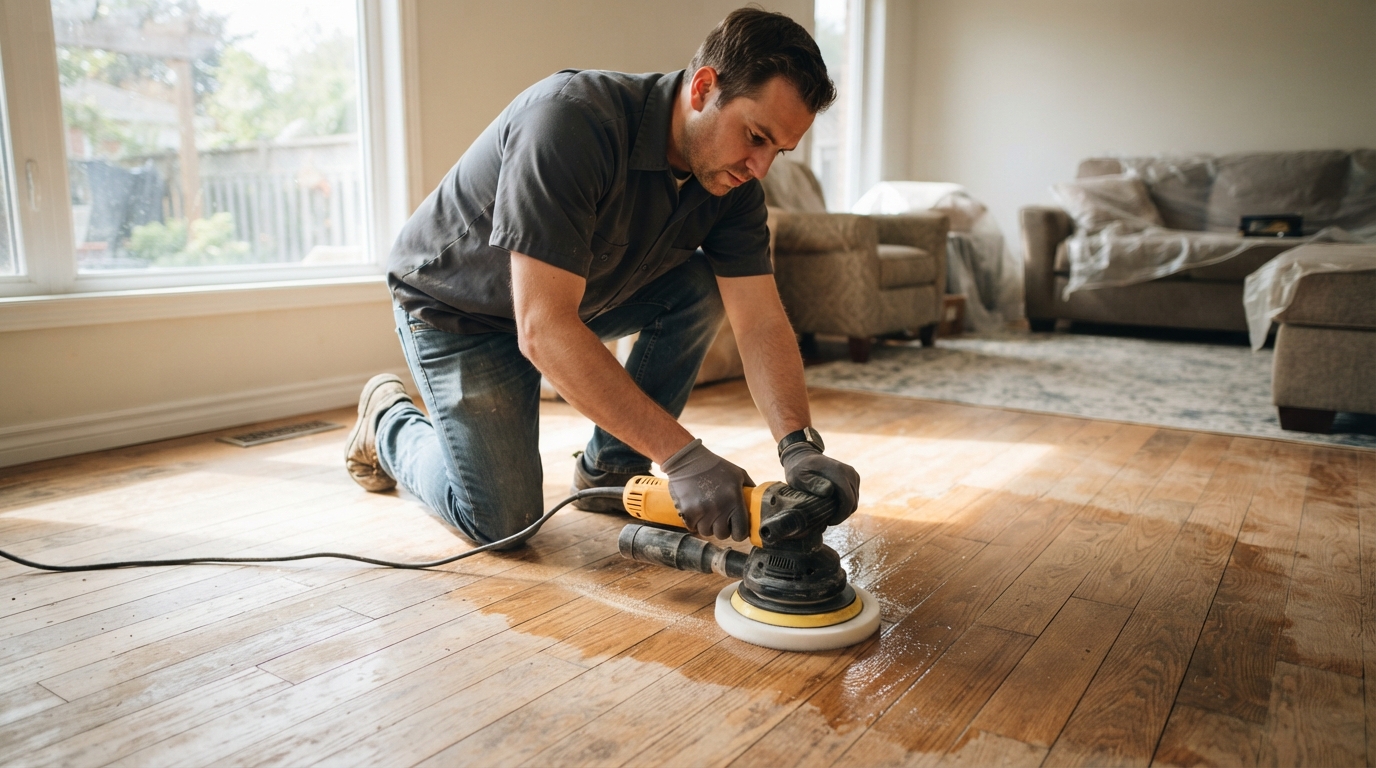
Dull, scuffed hardwood does not always mean a floor needs full sanding. In many cases, the finish layer has simply worn thin, and a sandless approach can restore shine without removing any wood. Sandless floor refinishing uses wet preparation solutions and a high-speed buffing machine to clean and lightly resurface the existing finish before sealing it with fresh protective coats.
This matters for homeowners in Albemarle County, VA, where older farmhouses, subdivisions built in the 1980s and 1990s, and newer construction all carry a wide range of hardwood ages and finish conditions. A floor that looks tired from years of foot traffic, pet nails, or sun exposure is often a candidate for resurfacing rather than a full strip-down.
How the Sandless Process Differs From Traditional Sanding
Traditional refinishing removes a thin layer of the wood itself, typically between 1/32 and 1/16 of an inch, using a drum sander. Sandless refinishing instead works on the finish layer sitting on top of the wood, leaving the board thickness untouched.
• No wood is removed, which helps preserve floors that have already been sanded several times.
• Preparation uses a wet solution and abrasive pads rather than dry sanding, which limits airborne dust.
• Multiple coats of commercial-grade sealer and a chosen topcoat finish (matte, satin, semi-gloss, or gloss) are applied after the surface is prepared.
Because hardwood floors can generally only be sanded a limited number of times before the boards become too thin, a sandless method offers a way to renew the surface without using up that sanding lifespan. According to Wikipedia’s overview of floor sanding, the traditional process involves three stages: preparation, sanding, and coating with a protective sealant, which is far more invasive than a sandless resurfacing approach.
When Sandless Refinishing Makes Sense
Sandless refinishing works best on floors where the wood underneath is structurally sound and the damage is cosmetic.
| Floor Condition | Likely Fit for Sandless Refinishing |
| Light surface scratches, dullness, or fading | Good fit |
| Worn finish from foot traffic or pet activity | Good fit |
| Deep gouges reaching bare wood | Usually requires traditional sanding |
| Desire to change the wood’s existing color | Not achievable with sandless methods |
| Floor already sanded close to its limit | Often a strong candidate for sandless renewal |
A floor with deep structural damage, major warping, or water damage reaching the subfloor typically needs a different repair approach before any resurfacing can help.
What the Process Looks Like in Practice
Most sandless refinishing projects follow a similar sequence from preparation to final coat.
1. The floor is cleaned and treated with a wet solution to loosen the worn finish layer.
2. A high-speed machine with abrasive pads lightly resurfaces the area, with residue contained in the solution rather than released as dust.
3. Problem spots such as scuffed or discolored sections receive additional detailing.
4. Multiple coats of sealer are applied, followed by the selected topcoat finish.
Most services are completed within a single day, with normal foot traffic often possible again within a day or two depending on the finish used. Based in Charlottesville, VA, Mr. Sandless of Central Virginia works with customers throughout Albemarle County, VA on hardwood floor resurfacing projects of this kind.
Frequently Asked Questions
Does sandless refinishing work on heavily worn floors? It depends on whether the wear is in the finish or in the wood itself. Floors with scratches and dullness concentrated in the old finish layer tend to respond well, while floors with bare, exposed wood may need traditional sanding first.
Can sandless refinishing change the color of a floor? No. The process renews and protects the existing finish rather than altering the wood’s underlying tone.
How long does the process take to complete? Most sandless refinishing jobs are completed in about a day, with cure times for normal use varying by the specific finish applied.
Will sandless refinishing work on a floor that has been sanded many times already? Because the technique does not remove wood, it can be a practical option for floors nearing the end of their sanding lifespan.
Business Info
Sandless hardwood floor refinishing and related wood floor restoration services are available in Charlottesville, VA.
Current service area information for Mr. Sandless of Central Virginia is published for residents in the surrounding region.