Takeaway:
- Laboratory bench manufacturers design and build work surfaces engineered for chemical resistance, load capacity, and configuration flexibility.
- Bench selection affects workflow safety, equipment integration, and long-term durability in research settings.
- Adjustable and modular bench systems allow labs to reconfigure space as research needs change.
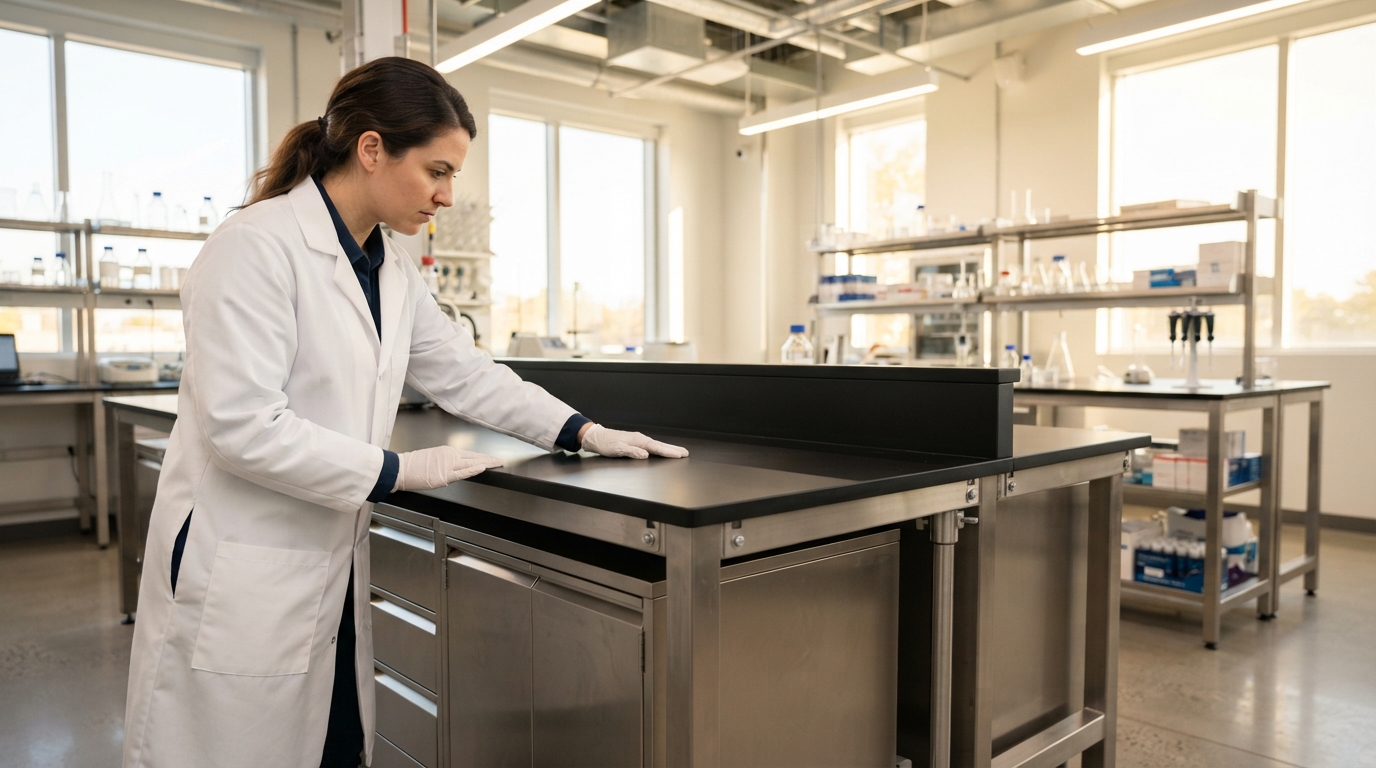
Laboratory bench manufacturers produce the fixed and modular work surfaces that support experiments, sample handling, and equipment placement in research and testing environments. These surfaces are built to specific standards for chemical exposure, weight loads, and ergonomic height, distinguishing them from general office or industrial furniture.
A research facility’s daily operations depend heavily on bench design. Surfaces that bend under load, degrade from chemical exposure, or cannot be reconfigured create safety hazards and workflow delays. Laboratory Bench Manufacturers address these demands through adjustable systems that let facilities modify height and layout without replacing entire workstations, a feature particularly relevant as research priorities shift within a single lab space.
Bench height adjustability also supports accessibility and ergonomic compliance, which has become a documented priority in laboratory design guidance. According to the National Institutes of Health design guidelines, laboratory workspaces should accommodate varied user heights and work postures to reduce strain injuries over repeated use.
What Defines a Quality Laboratory Workbench
A dependable laboratory bench balances material science with practical engineering. Manufacturers typically evaluate several factors before finalizing a design:
- Surface material: Epoxy resin, stainless steel, and phenolic resin each offer different resistance to acids, solvents, and heat.
- Load capacity: Benches supporting heavy instrumentation need reinforced framing to prevent sagging or tipping.
- Chemical resistance: Surfaces must withstand spills without staining, corroding, or releasing fumes.
- Adjustability: Height-adjustable frames let a single bench serve seated and standing work, or accommodate wheelchair users.
These specifications matter because a bench that fails under chemical exposure or physical stress can compromise both data integrity and personnel safety.
How Adjustable Bench Systems Support Research Flexibility
Research labs rarely stay static. Projects change, instrumentation is added, and teams grow or shrink, which means fixed casework can become a limitation within a few years of installation. Adjustable bench systems respond to this by allowing height, surface configuration, and storage components to be modified without a full renovation.
This flexibility carries practical benefits:
- Reduced downtime during lab reconfiguration, since benches adjust rather than requiring replacement.
- Better space utilization when square footage is limited or shared among multiple research groups.
- Longer service life, since the bench adapts to new equipment rather than becoming obsolete.
Facilities across the USA increasingly specify adjustable systems during new construction or renovation phases, particularly in multi-use research buildings where bench configurations must serve more than one department over time.
Comparing Common Laboratory Bench Materials
| Material | Chemical Resistance | Typical Use Case | Relative Cost |
|---|---|---|---|
| Epoxy resin | High | Chemistry and biology labs with frequent spills | Moderate to high |
| Stainless steel | High (corrosion-resistant) | Sterile or wash-down environments | High |
| Phenolic resin | Moderate to high | General-purpose teaching and research labs | Moderate |
| Laminate | Low to moderate | Administrative or low-exposure areas | Low |
Selecting the correct material depends on the chemicals handled, cleaning protocols, and budget constraints specific to each facility.
Frequently Asked Questions
What is the difference between a fixed and an adjustable laboratory bench? Fixed benches have a set height and configuration, while adjustable benches allow height and sometimes layout changes to accommodate different users or tasks.
How often should laboratory benches be replaced? Replacement timing depends on material wear, chemical exposure history, and whether the bench can still be reconfigured to meet current research needs rather than a fixed schedule.
Can laboratory benches be customized for specific equipment? Many manufacturers offer configurable frames and surface options designed to integrate with instrumentation, sinks, and storage components specific to a lab’s workflow.
Are adjustable benches suitable for shared or multi-use labs? Adjustable systems are often specified for shared spaces in the USA because they let multiple research groups modify the same workstation without structural changes.
Business Info
Facility and service details for Kewaunee Scientific – Manufacturing HQ are listed under its Google Business Profile.
Checking Current Availability
Current availability details for Kewaunee Scientific – Manufacturing HQ are published for the local service area.